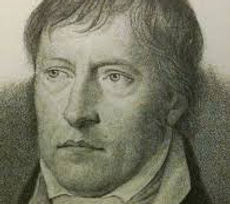


Zweck ist die Etablierung eines internationalen Hegel-Netzwerkes, vor allem für Forscher, die Hegel mit einem systematischen Interesse und in kongenialer, dem deutschen Idealismus methodisch verpflichteten Weise thematisieren (also nicht einfachhin davon ausgehen, daß dieser Idealismus, um verständlich und relevant zu sein, der Übersetzung in einen anderen Philosophietypus bedarf). Der Titel des Netzwerkes Hegels Relevanz soll nicht nur die Relevanz einer Beschäftigung mit Hegel für die philosophischen Probleme der Gegenwart zum Ausdruck bringen, sondern auch für ein besseres Verständnis von Hegels Wirksamkeit in der Philosophie zu und nach Hegels Zeit sowie für seine Auseinandersetzung mit der Geschichte der Philosophie. Dies schließt gut an die seit längerem schon anhaltende intensive Beschäftigung mit Hegel an.
Im Unterschied zu bestehenden Netzwerken sind der Thematisierung von Hegels Philosophie weder systematisch noch historisch Grenzen gesetzt, finden jährliche Treffen statt, die zudem von einem systematischen Interesse geleitet sind und von den Referenten einer entsprechenden Methodik gemäß bearbeitet werden. Überdies bietet das Netzwerk besonders auch Nachwuchswissenschaftlern (Doktoranden und Postdocs) die Möglichkeit, sich international zu präsentieren und profilieren. Damit trägt das Netzwerk zur Kontinuität der Auseinandersetzung mit Hegels Philosophie bei.
Steering committee of the International Network Hegel’s Relevance / Internationales Netzwerk Hegels Relevanz: Rafael Aragüés (Madrid), Jiri Chotas (Prag), Paul Cobben (Tilburg), Diogo Ferrer (Coimbra), Max Gottschlich (Linz), Bruno Haas (Paris), Lucca Illetterati (Padua), David James (Warwick), Zdravko Kobe (Ljubljana), Christian Krijnen (Amsterdam), Tereza Matějčková (Prag), Ermylos Plevrakis (Heidelberg), Alberto Siani (Pisa), Klaus Vieweg (Jena), Jean-François Kervegan (Paris), Folko Zander (Jena).

International Network
Hegel's Relevance

2025 Paris: Modelling
CfP

Call for Abstracts 10th Conference of the International Network Hegel’s Relevance
Hegel on Historicity
Athens, Greece 5-7 November 2026
Despite important precedents in Augustine, Bossuet, Voltaire, Kant, and Herder, Hegel is widely regarded as the first philosopher of history—not only because he subjected history to philosophical inquiry, but above all because he thematized the historicity of philosophy itself. Alongside his much-debated philosophy of world history, Hegel repeatedly stressed, throughout his oeuvre and especially in numerous programmatic and introductory remarks, that philosophy, including all metaphysical categories, and even rationality itself is substantially conditioned by history—by world history as well as by the histories of empirical sciences, art, religion, and philosophy. For Hegel, history articulates the very possibility of the actual spirit (Geist) in all its forms: there is no subjective, objective, or absolute spirit without history. This emphasis famously inspired Marx to describe the “science of history” as the “sole science.”
The upcoming conference aims to discuss central aspects of history and historicity in Hegel’s philosophy from a systematic perspective. Possible guiding questions include, but are not limited to:
-What is history, and why does it matter philosophically?
-What is the difference between historicity and mere contingency?
-What is Hegel’s notion of “philosophical history,” if it is neither historicism nor the projection of an external teleology onto historical facts?
-Does Hegel’s emphasis on historicity exclude any genuine possibility of predicting future developments, thereby restricting philosophy to the role symbolized by the “owl of Minerva”?
-To what extent is the historical development of concepts relevant to the immanent conceptual development within Hegel’s Philosophy of Nature, Philosophy of Spirit, and—most provocatively—the Science of Logic?
-How does historicity apply to seemingly ahistorical notions inherited from the rationalist or Kantian tradition, such as “truth,” “science,” “idea,” and “reason”?
-Is Hegel’s emphasis on historicity a form of pragmatism avant la lettre?
-Do art, religion, philosophy (and their various historical forms), or even human life and social institutions (and their own various forms), possess a specific intrinsic value beyond what is historically ascribed to them?
We invite postdoctoral researchers working in the field to submit an abstract (maximum 500 words) addressing one or more of these topics. The conference will include four postdoctoral slots. Coverage of accommodation costs is subject to available funding.
A collected volume based on the conference papers is planned for publication in the series Critical Studies in German Idealism (BRILL). The publication language will be English.
Length of papers: 30 minutes presentation, followed by 15 minutes of discussion
Deadline for submissions: 15 June 2026
Email address for abstract submissions: HegelOnHistoricity@gmail.com
Notification of acceptance: 30 June 2026
Conference languages: English, German
Confirmed speakers: Christophe Bouton, Paul Cobben, Maria Daskalaki, Allegra De Laurentiis, Georges Faraklas, Diogo Ferrer, Guido Frilli, Antonios Kalatzis, Jean-François Kervégan, Jannis Kozatsas, Christian Krijnen, Thomas Noutsopoulos, Tim Rojek, Panagiotis Thanassas, Klaus Vieweg
Organizers: Georges Faraklas (Department of Political Science and History, Panteion University), Jannis Kozatsas (Department of Primary Education, University of Thessaly), Ermylos Plevrakis (Department of History and Philosophy of Science, University of Athens)
Future events
Our Mission
Delve into the profound philosophy of Hegel with us at International Network Hegel's Relevance. Our academic community is dedicated to unraveling the complexities of Hegelian thought and its relevance in today's world. Join us for insightful discussions and engaging events. Discover the future of philosophy with us.
2026 (05.-07. November) Netzwerk-Tagung in Athen: Hegel on Historicity


Publications
Concepts of Normativity: Kant or Hegel? ed. Christian Krijnen, Brill: Leiden/Boston 2019
An Ethical Modernity? Hegel’s Concept of Ethical Life Today, ed. Jiří Chotaš and Tereza Matějčková, Brill: Leiden/Boston 2020
Logik und Moderne. Hegels Wissenschaft der Logik als Paradigma moderner Subjektivität, Hgg. Folko Zander und Klaus Vieweg, Brill: Leiden/Boston 2022
Zum Sinn von Religion. Perspektiven mit und auf Hegel, Hgg. Robert König und Max Gottschlich, Brill: Leiden/Boston 2023
Hegels Philosophie der Realität, Hg. Ermylos Plevrakis, Brill: Leiden/Boston 2024
“For Sense is this Wonderful Word”: Hegel and the Aesthetic, ed. Nicola Ramazzotto, Elena Romagnoli, and Alberto Siani, Brill: Leiden/Boston 2026